
Cart
Your cart is empty, but doesn't have to be..
Your cart is empty, but doesn't have to be..
VP Nordic |7/08, 2026
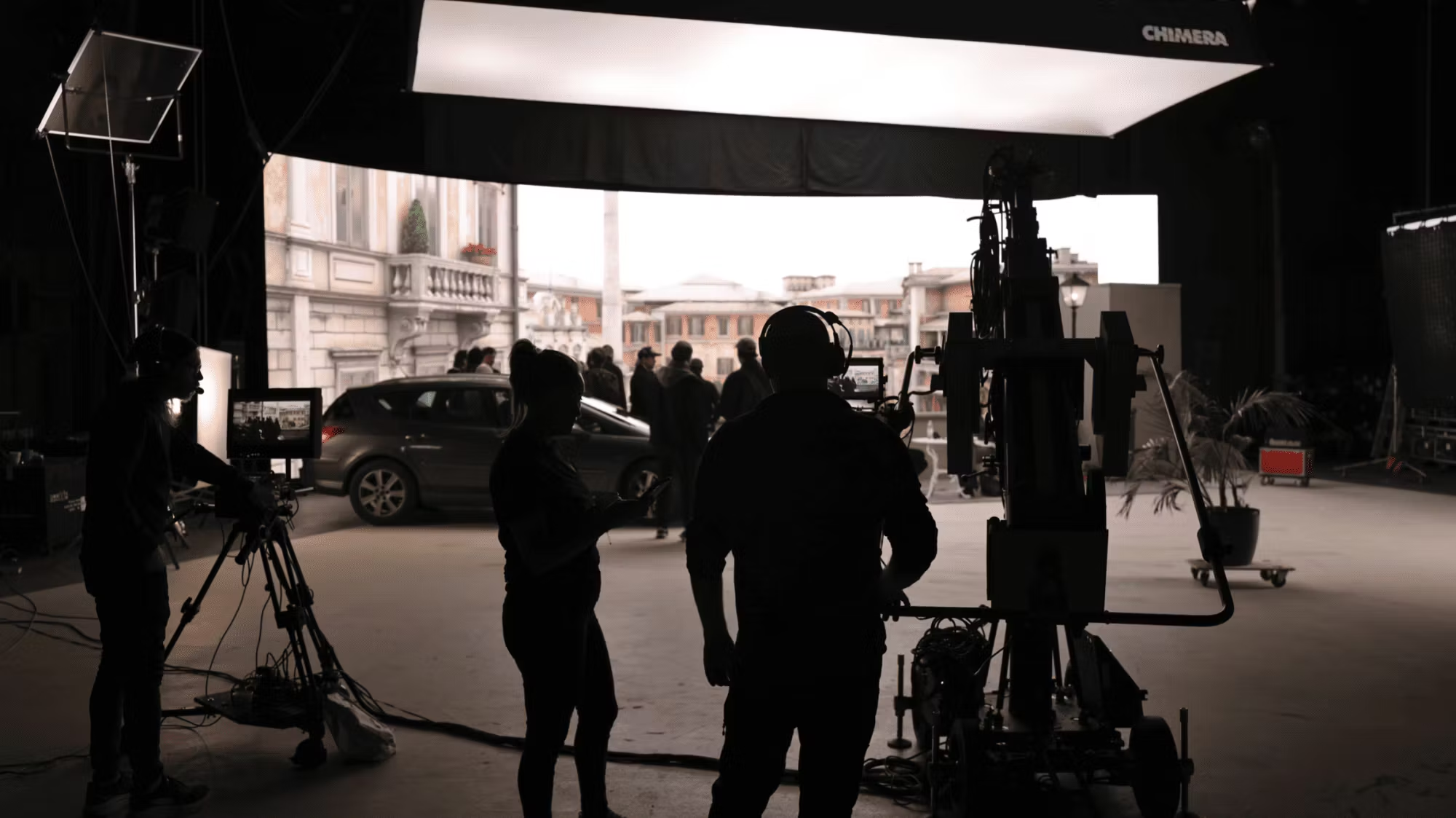
Virtual Production is changing how films, commercials, television series and branded content are created. By combining real-time 3D environments, camera tracking, LED walls and powerful rendering technology, filmmakers can see and capture digital environments directly on set.
One of the most important techniques within Virtual Production is ICVFX — In-Camera Visual Effects.
But what exactly is ICVFX? How does Virtual Production work? And what is the difference between filming on an LED volume and using a traditional green screen?
This guide explains the fundamentals of ICVFX, Virtual Production and LED volume filmmaking.
Virtual Production is a filmmaking workflow that combines physical production with real-time digital technology.
Instead of treating visual effects as something that happens mainly after filming, Virtual Production brings digital environments, VFX and visualization much closer to the actual shoot.
A Virtual Production workflow can include:
LED walls and LED volumes
motion capture
real-time compositing
augmented reality
green screen workflows
The key idea is that filmmakers can interact with digital environments while production is taking place.
Disguise describes Virtual Production as a technique that combines real-time digital elements with physical production, with real-time collaboration and iteration being a central part of the workflow.
This means that Virtual Production does not necessarily mean filming on an LED wall.
LED-based filmmaking is one important part of Virtual Production, but the term covers a much wider range of technologies and workflows.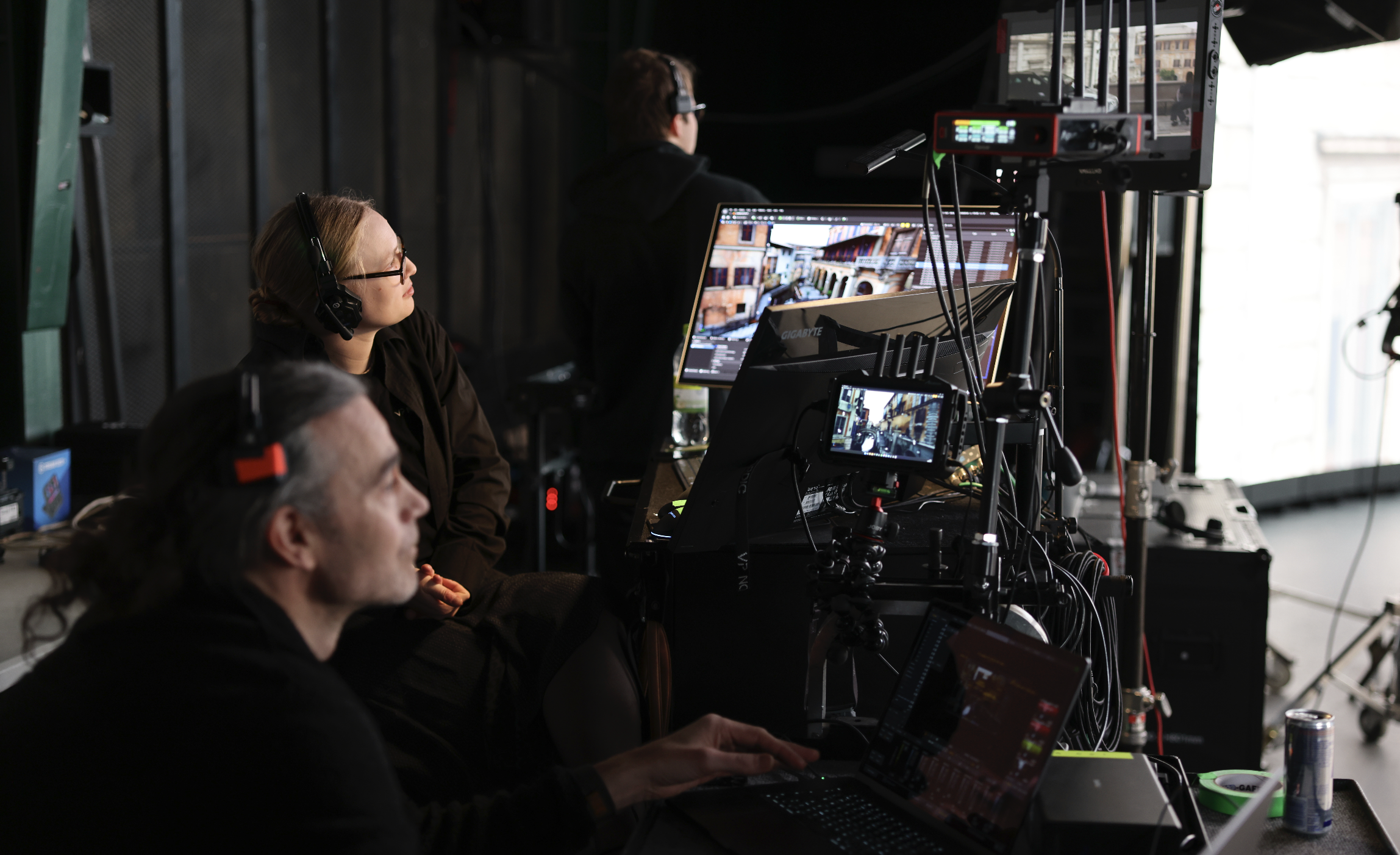
ICVFX stands for In-Camera Visual Effects.
ICVFX is a Virtual Production technique where digital environments are displayed on LED screens behind and around actors, props and practical scenery.
Instead of replacing the background in post-production, the camera can capture the virtual environment directly during filming.
Epic Games describes In-Camera VFX as a workflow combining LED lighting, live camera tracking and real-time rendering to integrate foreground actors with virtual backgrounds.
The goal is often to achieve as much of the final image as possible directly in camera.
This is sometimes referred to as final pixels in camera.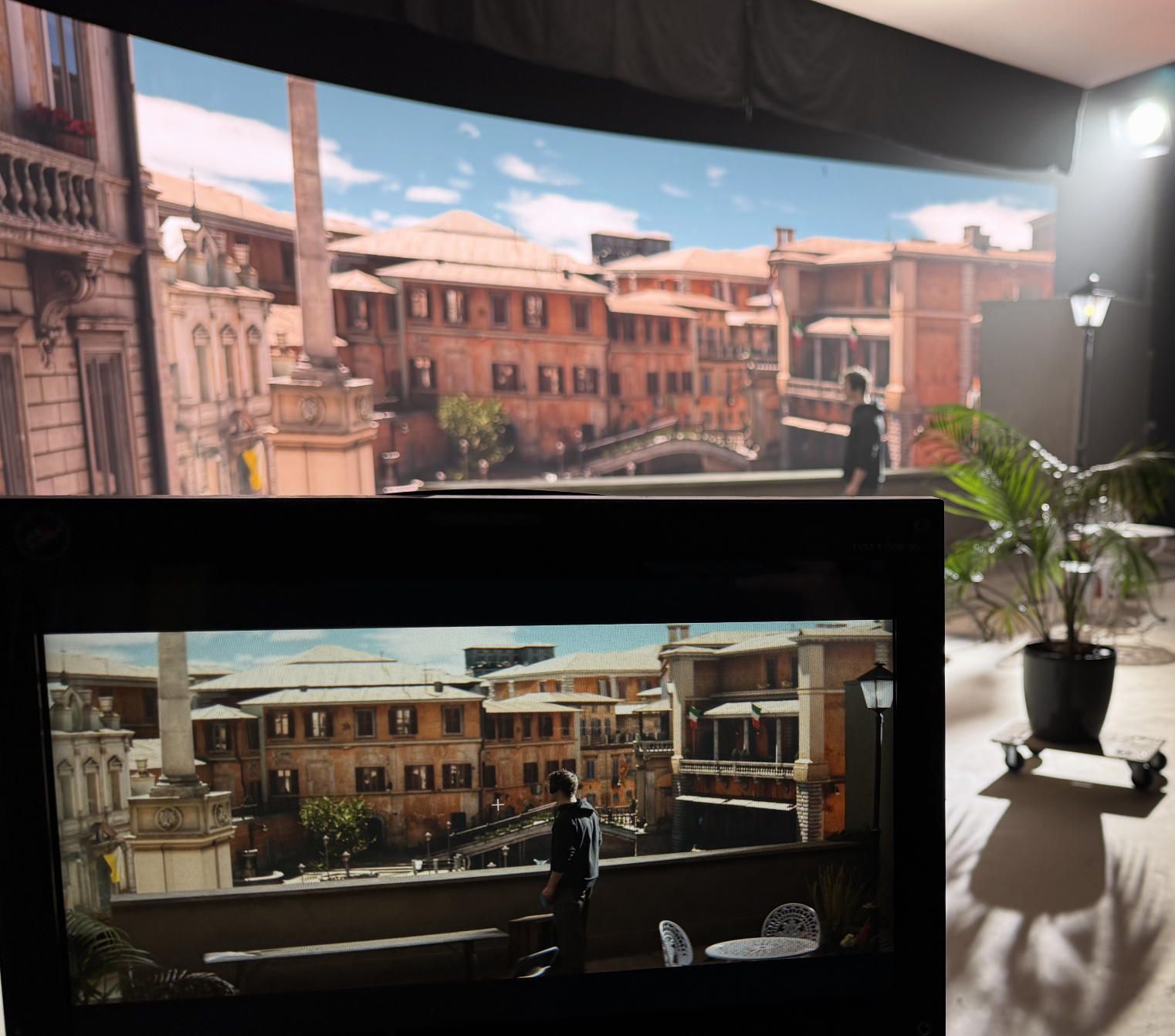
An LED volume is a studio environment built from large LED display surfaces used for Virtual Production and ICVFX.
Depending on the studio, an LED volume can consist of a curved or flat LED wall, often combined with LED side walls, a ceiling, movable LED panels and, in some configurations, an LED floor. Actors, physical props and practical set pieces are positioned in front of the LED displays. The LED screens then show a real-time rendered virtual environment. For the camera, the result can appear as if the actors are standing inside a much larger real or digital location.
A single LED volume might represent a city street in one scene, a mountain landscape in another, and a futuristic spaceship later the same day.
An ICVFX setup requires several technologies to work together in real time. The most important components are the virtual environment, LED display, real-time rendering system, camera tracking and camera/lens calibration.
The process usually starts with a digital 3D environment.
This could be a photorealistic city or a fictional planet. The environment may be created using 3D tools and then brought into a real-time engine such as Unreal Engine. Unlike a traditional pre-rendered background, the environment can be rendered and adjusted interactively. The content can also be ordinary filmed 2D-plates from real locations.
The digital environment is shown across the LED displays inside the Virtual Production studio. The physical camera then films both the real-world foreground and the LED background at the same time. This already creates an important difference compared with green screen production:
the background is visible during filming.
Actors can see the environment around them. The director can see the composition. The cinematographer can see how the digital background interacts with the lighting and camera. And clients can often see a much more complete image directly on set.
A key part of professional ICVFX is camera tracking. A tracking system measures the real camera's position and movement in the studio. This tracking data is sent to the real-time rendering system. The virtual camera inside the 3D environment then follows the movement of the physical camera.
As the real camera moves, the perspective of the virtual environment changes accordingly. Without camera tracking, the LED wall would essentially behave like a large television screen. With accurate camera tracking, the digital world can respond to the camera as if it were a real three-dimensional environment.
One of the most important concepts in ICVFX is the inner frustum. The inner frustum is the part of the virtual environment rendered specifically from the perspective of the physical camera. As the camera moves, this area moves across the LED wall and updates in real time.
This creates the correct perspective and parallax for the camera.
Epic Games' current Unreal Engine documentation treats the inner frustum as the image area specifically rendered for the ICVFX camera and places significant emphasis on maintaining high image quality and synchronization for this camera-visible portion of the LED display.
Parallax is one of the reasons an ICVFX environment can appear three-dimensional. Imagine looking through a window while moving sideways.
Objects close to you appear to move faster than objects far away. That difference in apparent movement creates a strong sense of depth. ICVFX recreates this effect digitally. Because the virtual camera follows the physical camera, foreground and background objects in the digital scene shift correctly in relation to each other. To the filming camera, the LED wall can therefore appear less like a flat display and more like a window into another environment.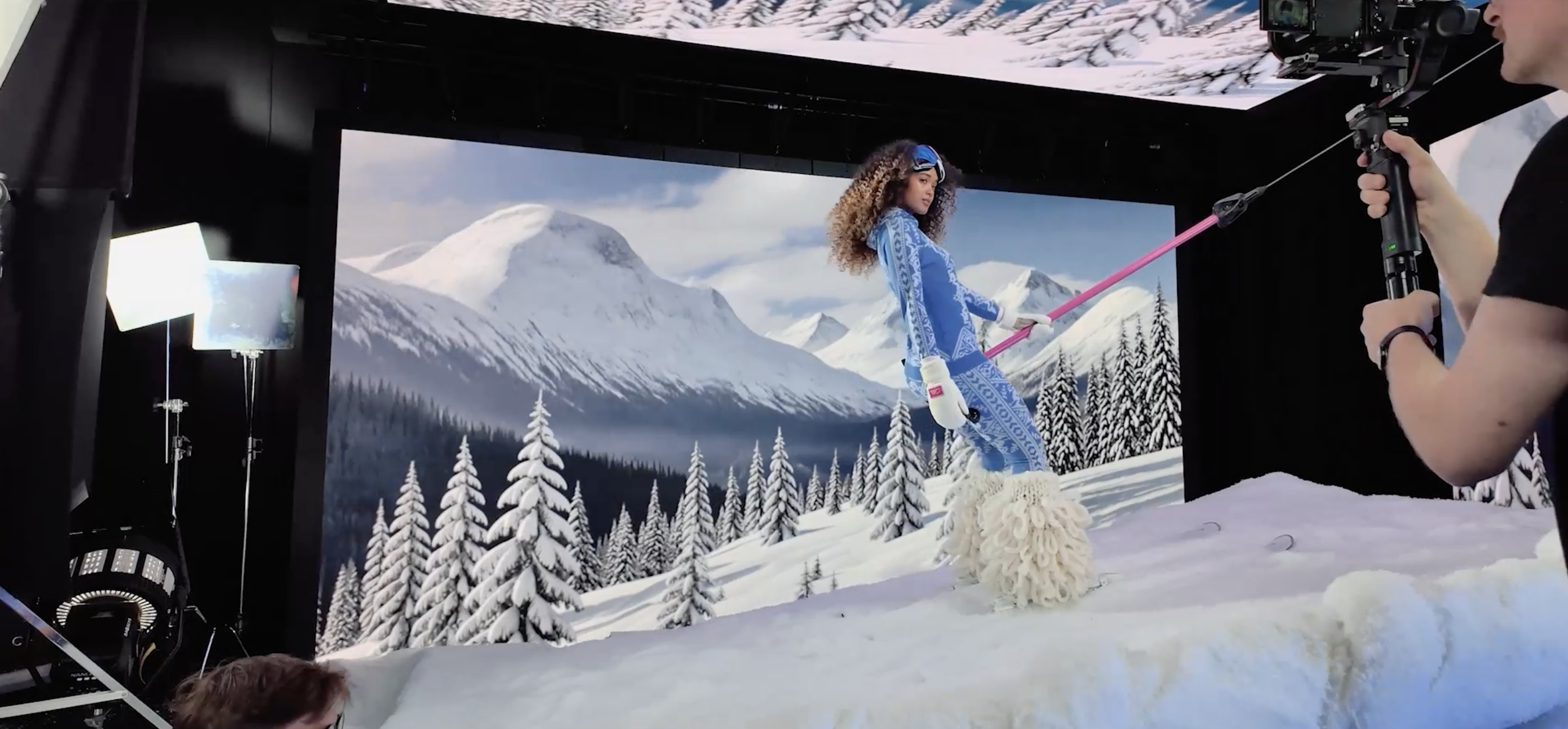
One of the major advantages of LED Virtual Production is that the LED screens do more than display a background.
They also emit light.
That light reaches actors, props, vehicles. Imagine an actor standing in front of a virtual sunset. The LED wall can produce orange and red light that naturally falls across the actor and set. Or imagine filming a car driving through a virtual city at night. The moving digital city lights can create changing reflections across the windows, paintwork and chrome.
These interactive lighting effects are one of the strongest differences between LED-based ICVFX and traditional green screen production.
One of the most common questions about Virtual Production is:
Is ICVFX replacing green screen?
Not necessarily.
Both technologies are useful, and each has advantages. With green screen production, actors and objects are filmed against a green or blue background. The background is then removed using chroma keying and replaced with another environment during compositing. This gives post-production teams significant flexibility. At VP Nordic we work with both methods, depending on what the project needs.
With ICVFX, the digital environment is already visible behind the actors during filming. This can provide several advantages. The background can be captured directly in camera and the actors can see the environment. The directors can judge composition immediately and the cinematographers can light against the real background image.
Green screen still has important advantages when a production requires extensive isolation, complex compositing or major changes after filming. The best solution depends on the shot. Many modern Virtual Production workflows combine LED walls, green screen, practical sets and traditional VFX.
Unreal Engine has become one of the most widely used real-time engines in Virtual Production and ICVFX.
Originally developed for video games, Unreal Engine can render complex 3D environments in real time. That makes it possible to change a virtual scene while the production is happening. A Virtual Production team can adjust lighting, sun position, time of day, clouds, environment layout, virtual props, atmospheric effects, camera position, colour, exposure and background elements in real time.
Instead of waiting for a traditional offline render, the team can see many changes almost immediately.
Epic Games maintains dedicated ICVFX and Virtual Production tools inside Unreal Engine, including support for nDisplay, Live Link, camera calibration, lens data and stage monitoring.
In Unreal Engine-based ICVFX setups, nDisplay is commonly used to distribute and display Unreal Engine content across large multi-screen installations. A professional LED volume may contain millions of pixels spread across multiple LED processors and rendering computers. nDisplay helps coordinate the rendered image across those displays. In larger installations, multiple render nodes may work together to generate the final output. Synchronisation is extremely important because the LED image must remain aligned with the camera and the rest of the system.
ICVFX can offer major creative and production advantages.
Directors and cinematographers can see the relationship between actors and virtual environments while filming.
This allows creative decisions to happen earlier.
Cars, glass, metal and other reflective surfaces can reflect imagery directly from the LED screens.
This can be especially valuable for automotive shoots, or other glossy materials.
Virtual environments can contribute real light to physical subjects. This helps connect the foreground with the background.
A production can control conditions that are difficult or unpredictable on location.
For example:
sunset can last for hours
weather can remain consistent
traffic can be removed
lighting can be repeated
multiple locations can be filmed from one studio
Virtual Production may reduce the need to move large crews between multiple locations. This can be particularly useful when filming in remote, dangerous, expensive, weather-dependent or otherwise difficult-to-access locations.
One of the biggest changes introduced by ICVFX happens before filming starts. With a traditional VFX workflow, some decisions can be postponed until post-production. With ICVFX, the virtual environment often needs to be ready before the shoot. That means more collaboration between departments during pre-production.
Teams may include:
director
cinematographer
production designer
VFX supervisor
Virtual Production supervisor
This is why Virtual Production should be understood as a workflow, not simply as a piece of technology.
What does ICVFX stand for?
ICVFX stands for In-Camera Visual Effects.
It is a Virtual Production technique where real-time digital environments are displayed on LED screens and captured by the physical camera during filming.
Is ICVFX the same as Virtual Production?
No. Virtual Production is the broader category. ICVFX is one technique within Virtual Production.
Virtual Production can also include virtual cameras, motion capture, real-time green screen compositing, previsualization and augmented reality.
What is an LED volume?
An LED volume is a studio space built with large LED display surfaces that can show virtual environments around actors and physical sets. It is commonly used for ICVFX.
Do you need Unreal Engine for Virtual Production?
No. Virtual Production is not dependent on one specific software platform. However, Unreal Engine is widely used because of its real-time rendering and dedicated Virtual Production tools. You can also use video plates, motion design or AI-generated content as backgrounds.
What is the difference between ICVFX and green screen?
Green screen backgrounds are generally replaced during compositing. With ICVFX, the virtual background can be displayed on LED screens and captured directly by the camera.
What is camera tracking in Virtual Production?
Camera tracking measures the physical camera's position and movement. This information is used to update the virtual camera so that the perspective of the digital environment matches the movement of the real camera.
What is an inner frustum?
The inner frustum is the camera-specific portion of the virtual environment rendered on the LED wall. It follows the tracked camera and provides the perspective seen through the camera.
ICVFX — In-Camera Visual Effects — is a Virtual Production technique that combines LED displays, camera tracking and real-time rendering to place actors and physical objects inside virtual environments during filming.
Virtual Production is the broader workflow that connects physical filmmaking with digital tools in real time.
Together, these technologies are changing when and where creative decisions are made.
Instead of waiting until post-production to see the digital world, filmmakers can increasingly see, light, frame and capture it directly on set.
That is the real promise of Virtual Production:
bringing the physical and digital sides of filmmaking together while the camera is rolling.